
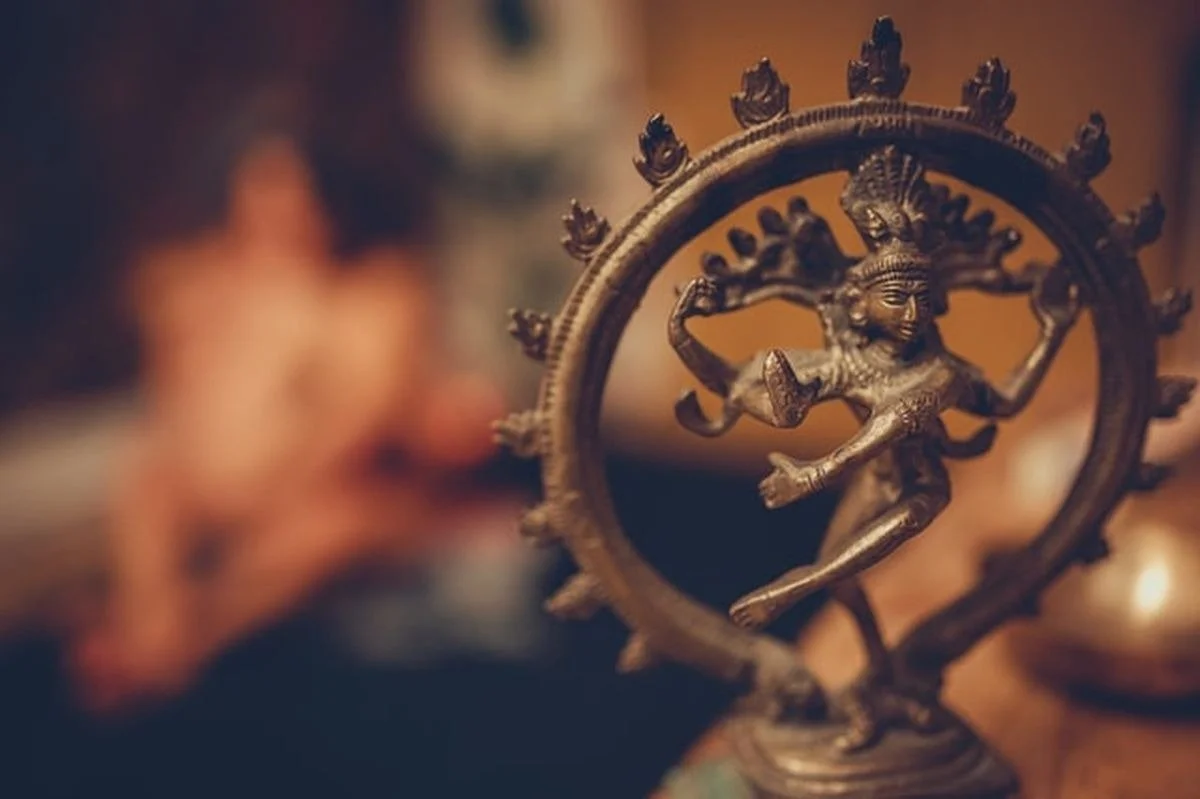
Living Tantric Philosophy: Yamas and Niyamas
SOLD OUT: Contact for Waitlist
Wed 11th March 2026, 6.30-8.30pm
Online, Zoom
+
Fri 20th March 2026, 11.15am-5pm
In person, The Green House XSUK, Bristol
Join us for an exploration of non-dual Tantric yamas and niyamas - ethical guidelines for living with integrity - in an immersion bringing yogic philosophy to life.
An invitation to unpack and embody these profound teachings through engaged practice and lively discourse that draws directly from Tantric texts and lived experience. A full spectrum of study, including conversation, journalling, movement, mantra, and more will give you practical and digestible tools to enrich your practice - whether a lover of yoga, or a teacher yourself.
The 10 yamas and 10 niyamas as described in the Śāradā-tilaka ('Sarasvatī's Ornament’) are illuminating guidelines that originated from earlier non-tantric texts, such as the Shandilya Upanishads. They are offered here within a Tantric framework. Fun fact - Śāradā-tilaka is also where the seven-point chakra system is first recorded in writing!
Through the workshop we’ll also be exploring why the philosophy underlying these Tantric yamas and niyamas may be more suited to us as modern day practitioners, compared to dualistic frameworks like those of Patañjali.
WHAT?
In the Tantric context, these concepts offer values that support us to exist more harmoniously together (yamas – restraints or values) and guidelines for cultivating our spiritual pathway (niyamas – spiritual disciplines). Taken together, these invitations can at minimum support us to navigate daily life with less suffering, and at best provide fertile soil for awakening, guiding our liberation and encouraging the lifting of the veil of separation.
What are the yamas and niyamas from the Śāradā-tilaka? We give a very brief definition below.
Yamas (यमाः)
Ahiṃsā (अहिंसा) – non-violence
Satya (सत्य) – truth
Asteya (अस्तेय) – non-stealing
Brahmacarya (ब्रह्मचर्य) – wise management of sexual / vital energy
Dayā (दया) – compassion, mercy (sometimes expressed as Kṛpā)
Ārjava (आर्जव) – straightforwardness, sincerity
Kṣamā (क्षमा) – patience, tolerance, forgiveness
Dhṛti (धृति) – calm resolve, steadfastness
Mitāhāra (मिताहार) – moderation in food, consuming less
Śauca (शौच) – cleanliness, purity
Niyamas (नियमाः)
Tapas (तपस्) – self-discipline, austerity
Santoṣa (सन्तोष) – contentment
Āstikya (आस्तिक्य) – faith (belief in truth / ultimate reality)
Dāna (दान) – giving, generosity
Pūjā (पूजा) – reverence, worship
Siddhānta-śravaṇa (सिद्धान्तश्रवण) – listening to the teachings / scripture
Hrī (ह्रीः) – humility, modesty, sense of moral restraint
Mati (मति) – pondering, discrimination, right understanding, enquiry
Japa (जप) – repetition (often of mantra)
Huta / Homa (हुत / होम) – ritual offerings into the fire
Among the myriad of Tantric teachings we’ve explored in our time as yoga practitioners, teachers and nerds, we’ve found these Tantric yamas and niyamas to be some of the most resonant and useful philosophical guides in coming back to our truest selves and cultivating healthy connection with others. It feels important to keep them alive! With thanks to Christopher Wallis' 21 day immersion course into these teachings.
We are still learning about them, understanding them and integrating them into our lives. Yoga off the mat. We invite you to sit alongside us in our journey, to see if these simple yet profound tools hold some magic for you too.
We are thrilled to explore them with you during this immersion, where discourse and questioning is encouraged and practices are engaged with to bring the theory to life.

WHO?
Megan Avery (she/her) is a clinical psychologist specialising in complex trauma, an experienced yoga teacher & teacher trainer, a founding director of the Bristol Yoga Roots Project and a nature-based facilitator. She's passionate about embodied wisdom and working reciprocally with nature for the healing and growth of all. She is fascinated by yogic philosophy, which has supported her through her own times of crisis and revelation.
Elena Byers (she/her) is a movement teacher, arts curator and kirtan leader. She teaches somatic yoga and sacred song rooted in Non-Dual Tantra, community + playfulness; guided by a lifetime of training in the creative body - through contemporary movement, opera and fine art studies. She curates and teaches internationally on retreats, runs regular song circles - sharing a mix of modern medicine song and Vedic mantras - and is passionate about sharing the joy of yoga through community wellbeing projects in schools and with various charities. Forever inspired by how movement can enliven our awareness of the natural rhythms and flow of life within us, she teaches from a place of genuine love for the wider ecosystem of nature, and our place within it.

WHERE AND WHEN?
This offering will be split into two parts:
Online: Wednesday 11th March 2026, 6.30-8.30pm. We will meet on Zoom.
In person: Friday 20th March 2026, 11.15am-5pm. We will meet at: The Green House Xquisite Spaces UK, Hereford Street, Bedminster, Bristol BS3 4NA (also known as The Hideout)
COST?
Rates for the two sessions, including a gorgeous pdf info pack of rich take-home practices:
EARLYBIRD (until 14th Feb)
Supporter - £120
Standard - £99
Community - £80
Bursary - one fully funded space or two half price spaces depending on requests received
REGULAR (from 14th Feb)
Supporter - £140
Standard - £120
Community - £99
Bursary - one fully funded space or two half price spaces depending on requests received
To apply for a bursary spot, please email megan.amy.avery@gmail.com and hello@elenayoga.co.uk to enquire.
This event is now fully booked - please email us at megan.amy.avery@gmail.com and hello@elenayoga.co.uk to join the waitlist.
We can’t wait to share this illuminating work with you!
Megan + Elena
🖤